Where does bipedal evolution lead? — the future direction of the human body

It all began with “imperfect walking”
Our ancestors once moved on all fours.
However, evolutionary pressures such as environmental changes, the freeing of the hands, and the expansion of the field of vision gradually pushed the body toward bipedal walking.
Around 4.4 million years ago,
in the woodlands of Africa, there existed a peculiar being:
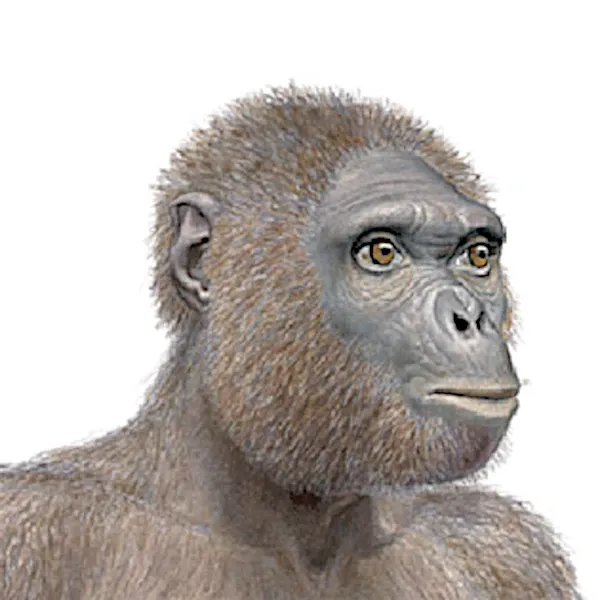
Ardipithecus ramidus
They climbed trees, yet also walked on two legs.
But their gait was nothing like ours.
- No developed foot arch
- An outward-diverging big toe
- A structure still adapted for grasping branches
They were not fully terrestrial walkers.
They were a transitional body, suspended between trees and ground.
And yet,
they had already begun choosing bipedalism.
That choice would eventually reshape everything about humanity.
Bipedalism is not a final form
Modern humans tend to see bipedal walking as a completed system.
But from an evolutionary perspective,
it is merely a temporary optimization.
Bipedalism gave us:
- Expanded visual range
- Freed hands
- The foundation for tools and civilization
But it also introduced:
- Lower back pain
- Joint stress
- Postural instability
It is a design of trade-offs.
Like early hominins,
the human body is not complete—
it is continuously adapting to context.
A “New Evolution” That Has Already Begun
When we think of evolution, we tend to imagine changes that unfold over tens of thousands of years.
But today, evolution is progressing in a different form.
It is the transformation of the body through lifestyle.
Surrounded by smartphones and computers, modern humans now live in postures that are completely different from those of the past.
One study proposed a model called “Mindy” as a possible image of humanity in the year 3000.
In this model, the head tilts forward, while the muscles of the neck and shoulders become more developed in order to support it.
It has also been suggested that prolonged device use may cause the spine to lose its natural S-shaped curve, potentially affecting even respiratory function.
This is not a genetic mutation.
It is a form of “slow evolution” induced by the environment.
Evolution follows environment, not ideals
Ardipithecus ramidus adapted between forest and ground.
Modern humans are adapting within digital environments.
This reveals a fundamental principle:
Humans do not evolve toward an ideal form. They evolve toward what their environment demands.
From this, several possible directions emerge.
1. Adaptation to “low-movement bodies”
Automation, AI, and desk-based work
reduce the necessity of physical movement.
We are already seeing:
- Reduced muscle mass
- Lower bone density
- Fixed, constrained posture patterns
Bipedalism may remain,
but its quality and expression could degrade.
2. The rise of “augmented bodies”
Another trajectory is integration with technology:
- Wearables
- Exoskeletons
- AI-assisted control systems
Here, evolution is not biological,
but externalized.
The body is not changed internally—
its function is extended outward.
This is evolution by design.
3. The emergence of “selectable bodies”
Beyond that lies intervention at the biological level:
- Gene editing
- Regenerative medicine
- Longevity engineering
Evolution, once driven by natural selection,
may shift toward intentional design:
- Enhanced disease resistance
- Extended lifespan
- Optimized physical capability
At this stage,
evolution is no longer accidental—
it becomes deliberate.
Beyond bipedalism
Ardipithecus ramidus existed between trees and ground.
Modern humans exist between physical and digital worlds.
So what comes next?
Perhaps we move beyond being “walking beings” altogether.
Or perhaps we rediscover movement
and redesign the body toward greater refinement.
Conclusion
Bipedalism was never the destination.
It was one decision within a much longer process.
Like early hominins,
our bodies continue to evolve with our environment.
Technology, lifestyle, and human intention
are now intertwined in shaping that trajectory.
The future form of the human body remains uncertain.
But one thing is clear:
evolution has not ended.
And 10,000 years from now,
the human body may be something we can barely recognize.